Showing posts with label Brazil. Show all posts

Friday, 29 January 2016

Curandeiras do Brasil

O FACTUAL E O PESSOAL com Gabi Veras
Local: VC304 (Victoria College)
Time: 3pm
Talk in Portuguese


Healers is a documentary film about Gabi Veras’ personal journey exploring the important role of the female healers in rural and remote areas of northeast Brazil.

Assista Healers aqui:https://vimeo.com/69288808 

Healers (2013) Directed by Gabi Veras

This story began in 2010 with Veras’ journalistic project concerning the impact of  female leaders in poor rural communities in north-east Brazil. This professional  experience soon became a personal journey about hope, a promise, and a re-encounter. Healers tells the story of a woman known as Dona Josefa who has been  a health care worker, midwife, and community leader for over 50 years. Besides  taking care of villagers, she can deeply affect people who cross her path, like  filmmaker Gabi Veras—who had a dream of becoming a mother. After a promise  made by Veras, the director returns to Sertão—Brazil’s most neglected area—and  discovers the world of herbal medicine.  Healers shows that despite the lack of support from authorities in these remote  areas, traditional medicines which combine prayer with the use of herbs are slowly  making governments realize their power. Today, some communities in the region  that have been served by these herbal-based treatments have shown themselves to  have efficient, trustworthy, and economical systems of alternative medicine.  Intrigued by such an effective way of promoting health, Veras takes the viewer on  her personal journey, uncovering an unconventional world that exists and functions  thanks to women like Dona Josefa.


Gabi Veras
Born on a tropical island, Gabi Veras has spent more than 15 years in newsrooms  both in Brazil and Canada. She has been a freelance journalist for CBC Radio  and Radio Canada International. Most recently she was as a producer for CBC  Newsworld, and also for OMNI Television in Toronto and Calgary. Telling  compelling human stories through documentary has always been her passion. In  2001, she co-produced Avi Lev’s documentary We Are Samba.


Tuesday, 5 January 2016

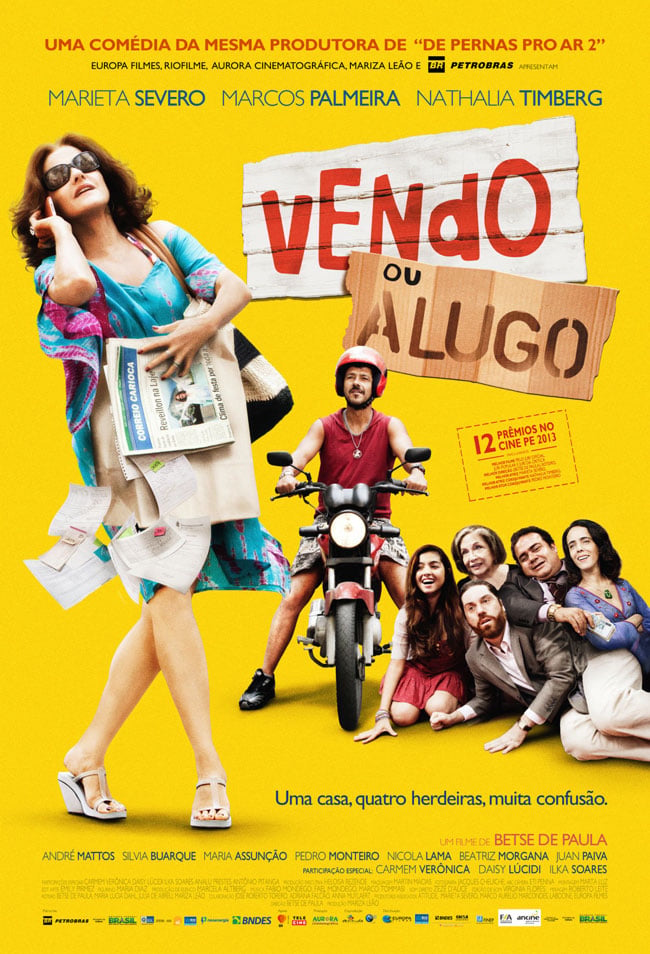
Screening: For Sale or Rent

Rio de Janeiro. Maria Alice (Marieta Severo) lives in an old luxurious home at the proximity of a favela with her mother, daughter and granddaughter. She works as a free-lancer translator, even for her drug dealer neighbors, but she knows that the only way to solve her problems is selling the house. Given its proximity to a slum, they find themselves also unable to sell or rent it. When the UPP (Special Police Unit) occupies the community, potential buyers come to see the house. However, during their visit a shootout begins, leaving everyone trapped inside. While facing life threats, little sins are revealed by visitors and residents as tragicomic situations start to happen. (Subtitled in English) FREE ADMISSION


Introduction and post-screening debate with carioca Sandro Liberato. He is a journalist, a language teacher, musician and visual artist from Rio de Janeiro, where at the age of 15 he became the youngest member of the Brazilian Society of Fine Arts. He was director and editor of newspapers and magazines published in Brazil and Canada. Now living in Toronto, where he teaches at UofT and Camões Institute, in addition to his passion for teaching he is well known for his music and art: http://sandroliberato.carbonmade.com

Hudson Moura's photo.


Friday, 27 November 2015

 Getulio Vargas and the man who killed him


by Kelsey Cunningham 

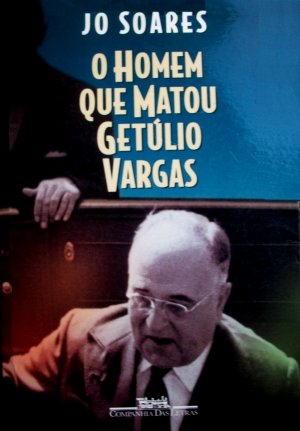
On December 3rd, the Department of Spanish & Portuguese will present a screening of the film Getúlio at the Media Commons Theatre at Robarts Library. On the same theme and also available in the library’s collection of Portuguese language works is the novel O Homen que Matou Getúlio Vargas as well as it’s translation into English, Twelve Fingers: biography of an anarchist.

Diametrically opposite in every way, the film Getúlio directed by Joao Jardim and the novel O Homem queMatou Getúlio Vargas by Jô Soares recount the fate of the man who governed as dictator from 1930-45 and as democratically elected president from 1951-54. If these works converge on the suicide of the president, the tone and plot could not be any more different between these two works until that fatal end scene at the end of each work.


However, the starkest difference between these works is the point of view from which the story is told. In Getúlio,we see a humanized portrait of the dictator who couldn’t tie his shoes and who loved his daughter Alzira with a moving tenderness. Jardim attempts to plunge the viewer into verisimilitude to the point of choosing actors based on resemblances that seem to bring real historic photographs to life.  The book by Soares, however, is told from the perspective of a fictitious would-be assassin. Vargas appears as a minor character who represents a composite of the paradigms which the bumbling twelve-fingered Dimo endeavours to tear down.

Despite the fact that his political career spanned decades, Jardim’s film intimately zeros in on the chaos of the presidential palace and the psychology of the president during his final days. The Man who Killed Getúlio Vargas, on the other hand, spans the entire life of protagonist Dmitri Borja and his journeys as frustrated political assassin across the globe from his failed attempt targeting Franz Ferdinand to 24 August, 1954.

The dramatic tone of the film highlights the President Vargas’ resolve to not let the media-fueled coup d’état take him down alive. The film emphasizes the dictator’s innocence within the eye of a storm of his government’s endemic corruption; regarding the murders committed by his personal guard, Vargas affirms “not to have committed any crime”. The film goes to the verge of martyrizing the president through the inclusion of actual footage of widespread mourning as his coffin is ceremoniously paraded through the streets of Rio. Indeed, the president’s suicide is portrayed as a sacrifice for the people.

The humorous and light-hearted tone of Soares’ work lends itself to the feel of a quasi-picaresque novel whose cast of characters are pulled from the underworld of anarchy, gangs and brothels. The work also includes caricaturized versions of international literary and historical personalities, weaving the episode of Vargas’ suicide into the tapestry of western popular culture.

If Jardim’s film verges on the sanctification of Vargas’ suicide as a patriotic and desperate act, Soares’ novel is the profanation of Death and the political ideologies that call for it.

Screening
Getúlio (2014) dir. by João Jardim
Introduced by Ambassador José Vicente Pimentel 
 
Date: December 3rd
Time: 7pm 

FREE ADMISSION

Local:
Media Commons Film Theatre – Robarts Library 3rd Floor
130 St. George st, Subway St. George University of Toronto


Thursday, 15 October 2015

BRAFFTV Festival Programming - Free Admission


9th BRAFFTV
Brazilian Film and Television Festival
Oct 15 - Oct 18, 2015
ENGLISH SUBTITLES
FREE ADMISSION
CARLTON CINEMA
20 Carlton St.


Thursday,October 15th, 7pm


Farewell (A Despedida)
Drama / 90'/ 2014
Directed by Marcelo Galvão

Based on a true story, the film tells the story of ‘Admiral’ (Nelson Xavier), a man who used to be very active and bon vivant but is facing difficulties inherent to his old age, in spite of his young spirit and indefatigable libido. At 92, one day he wakes up willing to fulfill his longing for the greatest love of his life, his former lover (Juliana Paes), a woman who is 55 years younger and in love with him.  


Don't Say Goodbye, I Say See You Soon (Eu Não Digo Adeus, Digo Até Logo)
Drama / 16’ / 2014
Directed by Giuliana Monteiro

The passion for trucks follows Antonio, a 10-year-old boy who lives in Corrego do Machado, a small village by the road in Minas Gerais, Brazil. His mother says he was born inside the cabin of his father’s truck a red 1518 Mercedes Benz. An old photograph of the truck is all that is left from this memory. While Antonio imagines his father’s life as a truck driver, he searches for clues and draws routes on the map in an attempt to fulfill his dream of finding his father.


Friday October 16th, 7pm


Insubordinate (Insubordinados)
Drama / 82’/ 2014
Directed by Edu Felistoque

With her father in terminal state at the hospital, Janete does nothing but spend his final days beside him. While waiting for the inevitable end of that painful journey, Janete writes incessantly, creating a police plot that helps address her deepest fears and desires, an escape valve that reveals much about who she is and how she faces such a tough situation. The film seeks to remind people of how creativity can be transformative. It is a compliment to all narrators, who love to tell stories.  

Castillo y el Armado (Castillo y el Armado)
Animation / 13’/ 2014
Directed by Pedro Harres

Castillo is a young dockworker who lives in a remote beach, somewhere between Brazil and Uruguay. He shares his time between the carpets he has to carry, his family and a fishing rod at the pier. One windy night, he faces his own brutality caught in the fishhook.


Saturday, October 17th, 5pm

BRAFFTV Talk Series

Join us for the discussion of the importance of diversity in creative teams. With the participation of award-winning directors Danilo Baracho and Mark Datuin and actress Sedina Fiati, co-chair of ACTRA's Diversity Committee. Free admission. Light refreshments will be served.

Saturday, October 17th , 7pm

Sintonizah (Sintonizah)
Documentary / 54’ / 2015
Directed by  Lecuk Ishida and Willy Biondani

This documentary takes the viewer on a groovy trip between Kingston, Jamaica, and São Luís do Maranhão, Brazil, conveying the emotions of those who live reggae and its incredible history. The film also reveals how the Maranhão culture has incorporated this musical genre, transforming the local scene into the “Brazilian Jamaica”.

The Little Match Girl(A Pequena Vendedora de Fósforos)
Animation / 9’/ 2014
Directed by Kyoko Yamashita

She is only a child struggling to survive in the concrete jungle. She was born unwanted, survives in an infamous way and will die rejected for what she is — poor, dirty and uneducated. Taking refuge in her imagination, she finally finds a comforting end.

Broders (Broders)
Drama / 14’ / 2014
Directed by Andre Matias

An American soldier and a petty thief meet at a bus stop in São Luís do Maranhão. Now, life brings them together again, with their memories, joys and fears of the 8 years they have been apart. In the past there is something they wish to delete, but there is also a lot to retrieve. 


Sunday, October 18th, 7pm

Trinta (Trinta)
Drama / 94’ / 2014
Directed by Paulo Machline

Based on true events, Trinta tells the backstage story of Joaosinho Trinta, a self-taught artist and frustrated ballet dancer who revolutionized Rio de Janeiro’s carnival parade in the 70s, becoming one of Brazil's most innovative artists of all times.


The Club (O Clube)
Drama / 17’ / 2014
Directed by Allan Ribeiro

The Ok club celebrates 53 years.

Friday, 2 October 2015

As marcas do português brasileiro

As marcas do português brasileiro

A análise de documentos antigos e de entrevistas de campo ao longo dos últimos 30 anos está mostrando que o português brasileiro já pode ser considerado único, diferente do português europeu, do mesmo modo que o inglês americano é distinto do inglês britânico. O português brasileiro ainda não é, porém, uma língua autônoma: talvez seja quando acumular peculiaridades que nos impeçam de entender inteiramente o que um nativo de Portugal diz. Veja no vídeo produzido pela equipe de Pesquisa FAPESP como a expansão do português no Brasil, as variações regionais com suas possíveis explicações e as raízes das inovações da linguagem estão emergindo por meio do trabalho de diversos linguistas.

Posted by Pesquisa Fapesp on Thursday, April 30, 2015
A análise de documentos antigos e de entrevistas de campo ao longo dos últimos 30 anos está mostrando que o português brasileiro já pode ser considerado único, diferente do português europeu, do mesmo modo que o inglês americano é distinto do inglês britânico. O português brasileiro ainda não é, porém, uma língua autônoma: talvez seja quando acumular peculiaridades que nos impeçam de entender inteiramente o que um nativo de Portugal diz. Veja no vídeo produzido pela equipe de Pesquisa FAPESP como a expansão do português no Brasil, as variações regionais com suas possíveis explicações e as raízes das inovações da linguagem estão emergindo por meio do trabalho de diversos linguistas.

Tuesday, 24 February 2015

Luso-Brazilian Film Screenings: Festivals’ Picks @ the Media Commons Theatre

Luso-Brazilian Film Screenings: Festivals’ Picks @ the Media Commons Theatre


The Department of Spanish and Portuguese in collaboration with the University of Toronto Libraries would like to invite you to the Luso-Brazilian Film Screenings: Festivals’ Picks that will be held on Thursdays of the month of March at the Media Commons Theatre (Robarts Library, 3rd floor).


PLACE    Media Commons Theatre (Robarts Library, 3rd Floor)
DATE    March 5, 12, 19 and 26, 2015
TIME:    7:00 pm
Screening 1 (Mar 5, 2015):

Found Memories (Histórias que só existem quando lembradas, Brazil, 2011) Directed by Julia Murat

Each citizen of Jotuomba plays an integral role in village life. Madalena is responsible for baking bread; each morning she stacks her rolls as Antonio prepares the coffee. The two share a morning ritual of arguments and insults, followed by an amicable cup of coffee on the bench outside Antonio’s shop. At midday the church bells ring, summoning the villagers to mass. In the early evening, they all share a meal together. And so life proceeds in Jotuomba, the days languidly drifting into one another. The only variations seem to be in the weather. One day Rita arrives looking for a place to stay. She came upon the village while traveling through the valley, following the unused railroad tracks. She is a photographer, intent on capturing the village’s special allure. Initially reticent, the townsfolk gradually open up to her, sharing their stories and allowing themselves to be photographed. Rita is comfortable with technologies old and new, and Madalena teaches her to knead dough by the light of an oil lamp. Only the village priest continues to find Rita’s presence worrisome, especially when she begins asking about the locked cemetery. It was awarded in several international film festivals, including San Sebastian, Lima, Reykjavik, and Washington DC.
Trailer: https://www.youtube.com/watch?v=-KX6dfb8lPs

Introduced by Hudson Moura

He is an Assistant Professor at the Department of Spanish & Portuguese at the University of Toronto. He teaches Luso-Hispanic literature and cinema. Presently he is working in the post-production of a documentary featuring Brazilian-Canadian dancer Newton Moraes. In addition, he serves as a film programmer and hands-on workshop facilitator in international film festivals in Toronto.

Screening 2 (Mar 12, 2015):

Tabu (Portugal, 2012) Directed by Miguel Gomes
A Portuguese explorer making his wistful way through the wilds of Africa, haunted by ghosts and threatened by crocodiles, is a character in a movie that is watched by Pilar (Teresa Madruga), a middle-aged single woman living in modern Lisbon. Her unadventurous, middle-class euro zone existence is melancholy in its own way. Like the explorer, Pilar is filmed in narrow-screen black-and-white, which casts a glow of nostalgic mystery over her everyday dealings with friends and neighbors. She teams up with her deceased neighbor’s maid to seek out a man who has a secret connection to her past life as a farm owner at the foothill of Mount Tabu in Africa. It has received many prizes, including two awards at Berlin Film Festival.
Trailer: http://www.imdb.com/video/imdb/vi261072665/?ref_=tt_ov_vi

Introduced by João Pedro Vicente Faustino

He has a Licenciatura degree in Modern Languages and Literatures, specializing in the areas of Portuguese and English, and a post-graduate degree in language and literature teaching, both from the University of Lisbon. He has been visiting lecturer in Portuguese at the universities of Delhi, India, and Granada, Spain. João is interested in the study of Second Language Teaching/Learning and of Contemporary Literature.

Screening 3 (Mar 19, 2015):

City of God (Cidade de Deus, Brazil, 2002) Directed by Fernando Meirelles

Cidade de Deus is an overwhelming film about the life of the notorious outer suburb of Rio de Janeiro of the same name, based on a book by Paulo Lins. The streets of the world’s most notorious slum are a place where combat photographers fear to tread, police rarely go and residents are lucky if they live to the age of 20. In the midst of the oppressive crime and violence, a frail and scared young boy will grow up to discover that he can view the harsh realities of his surroundings with an artistic eye. In the face of impossible odds, his brave ambition to become a professional photographer becomes a window into his world and ultimately his way out. Nominated for 4 Oscars, including Best Director and Best Adapted Screenplay.
Trailer: http://www.imdb.com/video/screenplay/vi3639516697/?ref_=tt_ov_vi

Introduced by Abigail Friendly

She is a planning scholar and urban researcher. She obtained a Ph.D. in Planning from the University of Toronto and a Masters in Global Politics from the London School of Economics. She studies issues of participatory planning and practice, governance and state-society relations, social justice, civil society and urban politics in the context of planning in Brazilian cities. She has lectured on Latin American geographies and given guest lectures on the Brazilian urban context. She has also worked in the public sector and as a consultant on public and urban policy including social housing and urban agriculture, both in Canada and Brazil.

Screening 4 (Mar 26, 2015):

Neighboring Sounds (O Som ao Redor, Brazil, 2012) Directed by Kléber Mendonça Filho

Meandering past the residents of a wealthy street in Recife, where private security guards ply their trade, this self-assured debut portrays the two sides of the Brazilian Dream. Filho scratches the varnish of a culture that revolves around paranoia, fear and revenge. In Neighboring Sounds, the director builds soundscapes not with pulverizing sonic waves but with a dog’s insistent bark, the faraway chatter of children playing, the sudden crash of cars at an intersection. Rather than a global apocalypse, the events depicted here are little more than a languid handful of days at an affluent block in the northeast city of Recife. Under Mendonça Filho’s wily direction, however, this seemingly low-key stroll through upper-class Brazilian streets and apartments turns out to be just as chocked with anxiety. Won many prizes around the world, including in the festivals of Rotterdam, São Paulo, Manila, Porto and Toronto Film Critics.

Trailer: http://www.imdb.com/video/imdb/vi3490030105/?ref_=tt_ov_vi

Introduced by Mike Filippov

He was born in Montreal, raised in Rio de Janeiro and educated in Ontario. He is an all around sound guy. He free-lanced in recording studios, was the technical director of CIUT FM and mixed music at Toronto’s Downtown Jazz Festival before taking on the film business. He currently works as a production sound recordist, post production sound editor/mixer and documentarian.

Language

All movies are in Portuguese with English subtitles. Each movie will be introduced and contextualized by a specialist and a Q&A session will follow each screening.

Free Admission

Admission to this event is free, but please take the time to complete our event registration form:

http://goo.gl/forms/14mdFUXNGs

Organizers

Hudson Moura (Department of Spanish & Portuguese)

Fabiano Rocha (University of Toronto Libraries)


Support

General Consulate of Brazil in Toronto


Contact

For further information regarding this event, please contact: fabiano . rocha @ utoronto . ca


Thursday, 5 February 2015

Documentary Screening: “Vote of Faith" by Maya Mayblin

Latin American Studies Presents: Vote of Faith Documentary Screening

by Maya Mayblin from Edinburgh University and Katherine Clough from Oxford University

Date: Thu. 5 Mar, 2015 12:00 pm – 2:00 pm

Location: Anthropology Building Room 246

Debate post-screening with director Maya Mayblin and professor Hudson Moura.


Vote of Faith follows the final, chaotic weeks of a mayoral election in the dusty interior of northeast Brazil. But this is in no ordinary election: a Catholic priest, Padre Jorge, is pitting his all against the incumbulent elite, a wealthy family which has ruled the town for decades, During their tenure, roads have crumbled, schools and health posts deteriorated, and water is in short supply. As an ordinary citizen, but also ‘Man of God’, Padre Jorge struggles to embody both secular and religious values. His odyssey offers an intimate window onto the complex intersection of radical hope and small-town politics.

Film Duration: 50 minutes

To view the trailer please visit: Vote of Faith
There is no registration for this event. All are welcome

Tuesday, 20 January 2015

Newton Moraes Dance Theatre: New Performances on February 04 to 07 @ 8pm

New performances at Winchester Theatre, February 04 to 07 at 8pm.
Unique performance at the Four Seasons for the Performing Arts on January 06, 2015 at noon. It is a free performance of Brazil, The Land of Tears and Soul.  This is a very beautiful, passionate dance created in collaboration with company’s dancers that included African-Brazilian culture and many emotions and feelings from Brazil’s cultural pot.

Photos by Cylla von Tiedermann.


Monday, 1 December 2014

Pesquisa no Brasil / Researching Brazil

Researching Brazil is an integrated platform for organized access to portals, full-text collections, print reference resources, current news, and journal indexing in Brazilian Studies created and maintained by Luis A. González, Librarian for Latin American Studies at Indiana University.  The Researching Brazil Bibliographic Index currently covers 120 history and social science journals published in Brazil.  The fully bilingual index of 2000+ citations of articles allows searching for keywords in both English and Portuguese.  The index also provides direct links to available full-text journal articles:   http://www.indiana.edu/~liblatam/researching-brazil/

Monday, 24 November 2014

Flores Raras @ Media Commons


Reaching for the moon (Flores Raras, Brazil, 2013) Directed by Bruno Barreto

Q&A with Hudson Moura

DATE: Monday, December 1

LOCAL:  University of Toronto Media Commons, Room 1

130 St George St, 3rd Floor

TIME:  5:00 p.m.

LANGUAGE: English and Portuguese

It is 1951. New York poet Elizabeth Bishop is looking for new inspiration for her work. She travels to Rio de Janeiro to visit Mary. Bishop’s moving poems are at the core of a film which lushly illustrates a crucial phase in the life of this influential Pulitzer prize-winning poet. Based on the true love story of  Bishop and Brazilian architect Lota de Macedo Soares. Initial hostilities make way for a complicated yet long-lasting love affair that dramatically alters Bishop’s relationship to the world around her.