Showing posts with label Cinema. Show all posts

Wednesday, 4 May 2016

Tropa de Elite 2: O narrador da verdade

Kierra Leyco

Tropa de Elite: O Inimigo Agora É Outro (José Padilha, 2010) conta a história do Capitão Roberto Nascimento que após uma decisão precipitada do seu colega, Matias, é desligado do BOPE (Batalhão de Operações Policiais Especiais) mas é nomeado para o cargo de Subsecretario de Inteligência da Secretaria Estadual de Segurança Pública do Rio de Janeiro. Vendo a situação como uma oportunidade de melhor combater o crime, ele descobre que o problema é mais complicado do que ele imaginava. Nascimento é então confrontado por uma situação política envolvendo grupos paramilitares (milícias) e oficiais governamentais. O filme conta a história a partir do ponto de vista de Nascimento, pois é relatada pelo narrador-personagem.
Tenho aqui o objetivo de examinar a importância e a verdade atribuída ao narrador-personagem, Capitão Nascimento. Esse ensaio analisará a verdade atribuída ao narrador como ‘voz da verdade’, um elemento documentário que dá poder ao narrador de impor sua própria opinião. O narrador é, portanto, vital para o desenvolvimento do filme, levando o espectador a melhor entender a situação de corrupção. Desse modo, o ensaio questionará e evidenciará igualmente capacidade do narrador de mostrar a corrupção atual enraizada no sistema. Mesmo não estando presente em certas cenas, ele tem a representação de um narrador onisciente, revelando a verdade, já que o filme conta a história do seu ponto de vista.


O Título
É importante primeiramente levar em conta o título do filme. O primeiro filme Tropa de Elite (2007) leva em conta o traficante da favela como o principal inimigo. Diferentemente, o segundo filme de José Padilha se foca na visão da instituição pela perspectiva de Nascimento. “O Inimigo Agora É Outro” demonstra que o inimigo vai muito além do que apenas os traficantes, mas também exibe todo o sistema corrupto que envolve o Brasil, que inclui desde traficantes até policiais e políticos. Como no primeiro filme, o narrador tem a função de revelar-nos sua história. Isso é enfatizado no início com o uso de flash-forward, quando o inimigo aparece atirando contra o narrador-personagem de Nascimento. Os inimigos revelam ser policias corruptos que estão fazendo uma represália por ele ter interferido nos negócios de corrupção. O filme é então baseado na vida do narrador-personagem e comprova ser a verdade dele.

A Função do Narrador Como a ‘Voz da Verdade’
A presença de um narrador mostra uma falta de confiança nas imagens visuais. Desse modo, as imagens podem ser eficazes, mas a dependência do narrador completa a obra na forma de palestra ilustrada. (Wiener, 2007, p. 73) O narrador não questiona, ele afirma. Por isso, o público também não sente necessidade de questionar as palavras do narrador porque ele é a representação da ‘voz da verdade’. Similar, a Ônibus 174 (2002), os narradores do documentário são a voz da verdade ao explicar os fatos da tragédia. No filme Tropa de Elite: O Inimigo Agora É Outro, Nascimento impõe uma verdade com suas palavras. Essa ‘verdade’ é enfatizada de forma que as imagens seguem a narração. No filme, temos a exibição do policial militar, Rocha, que sobe o morro de Rio das Rochas para coletar o “dinheiro do arrego” dos traficantes. Não tendo o dinheiro necessário, Rocha mata-os. A tela fica preta e nesse instante a voz de Nascimento interrompe com os fatos da verdade dizendo “o que aconteceu de verdade foi bem diferente”. Nascimento continua narrando e explica que, “nada como uma crise econômica para aguçar a criatividade. Foi só eu cortar o arrego do tráfico para os corruptos perceberem o óbvio. Qualquer comunidade do Rio de Janeiro é muito mais que qualquer ponto de venda de drogas.” Pelo seu discurso, vemos uma cena similar àquela de antes mas que tenta revelar-nos outra história, a qual reforça o discurso do narrador. Como resultado, Nascimento divulga a realidade da situação, criando uma relação de confiança entre ele e os espectadores; o que reforça a ideia de um narrador de veracidade. Essa relação é reforçada pelo modo como o narrador se dirige ao espectador, tratando-o várias vezes de “amigo ou parceiro”. Similar ao documentário Edifício Master (2002), o narrador utiliza palavras familiares que amplificam a verdade atribuída ao seu papel como ‘voz de verdade’.
Um filme tem a capacidade de “vomitar informação” sobre a realidade, em esperança que a o público se dê conta da situação atual. (Vieira, 2003, p.86) Como o narrador de Padilha, o filme Cronicamente Inviável (2000) em vez de usar um narrador, utiliza duas cenas parecidas e através da comparação entre as duas, questiona a realidade da nossa sociedade. Portanto, Nascimento ‘vomita informação’ com a intenção de fazer o público refletir sobre a situação real. Por exemplo, Nascimento diz que “na verdade, era o BOPE que estava ajudando o sistema. [...] O sistema estava mudando, estava evoluindo. Antes, os políticos usavam o sistema para ganhar dinheiro. Agora, eles dependiam do sistema para se eleger.” Nascimento não somente nos apresenta uma verdade no filme, mas consequentemente, tenta nos comprovar como o sistema corrupto atual se enraíza em todos os setores para se consolidar. Como explica Enrique Arias (Arias, 2006, p. 297-298), na realidade, a relação entre traficante e politico é de clientelismo. Os políticos se asseguram com os votos dos moradores da comunidade, pois são beneficiados privadamente pelos traficantes, e os traficantes pelos políticos. O sistema é, portanto, um negócio.


Tropa de Elite: O Inimigo Agora É Outro e o Elemento de Documentário
Devido a um aumento de crime, pobreza e violência urbana no Brasil, o tema de problemas sociais no cinema cresceu nos anos 90. (Borges, 2011, p.130) Como documentários, Tropa de Elite: O Inimigo Agora É Outro, explora alguns desses elementos mas de forma melodramática onde existe sensacionalismo e exagero emocional. O narrador também é um elemento fundamental num documentário porque ele conta uma história que o pertence. Tropa de Elite, como explica Ismail Xavier, (Xavier, 2012, p.8) expõe temas já explorados por documentários. O documentário Ônibus 174 (2002) de Padilha por exemplo, se baseia nas declarações de policiais e vítimas que estavam envolvidos nos acontecimentos. Estas vozes são diretas já que no documentário não existe um narrador principal, mas, semelhante a Tropa de Elite: O Inimigo Agora É Outro, utiliza o testemunho para formular a história. Como resultado, a imagem exibida fortalece as palavras do narrador já que seus comentários acompanham o filme com a narração voice-over. Por está razão a utilização das vozes é completamente diferente já que no filme de ficção ela é subjetiva e não direta.
A narração voice-over geralmente extrai o espectador da ação da tela, e destrói a ilusão por relembrar-nos que estamos assistindo um filme. Ademais, essa desconexão é acrescentada com o questionamento do espectador ao interrogar: porque Nascimento está narrando? E com quem ele está falando? A presença da narração de Nascimento é uma forma de contar um conto. Similarmente, o documentário de Ilha das Flores (1989), utiliza o elemento do narrador para guiar o espectador. A diferença é que Nascimento professa sua própria história utilizando várias vezes “eu” ao referir-se a cena, já que o documentário de Ilha das Flores nos oferece informação pela parte de um narrador-onisciente.
Semelhante ao documentário Ilha das Flores, o elemento do narrador sugere, entretanto, uma certa falta de inteligência pela parte dos espectadores, já que o narrador tem que constantemente explicar a cena. No filme, isso é claro quando a repórter, Clara, está investigando as milícias e seu amigo fotógrafo está tirando fotos, para uma matéria de capa, de indivíduos carregando caixas para dentro de uma casa. Na cena, o narrador explica que “as fotos eram mais que suficientes para matéria de capa. Mas jornalista, amigo, é curioso. A Clara não ia sossegar enquanto não descobrisse o que tinha naquele sobrado.” Enquanto isso, a jornalista parece muito ansiosa sendo retratada indo até a porta da casa. Apesar disso, o narrador é essencial em certas cenas porque ele nos oferece uma informação que não é claramente distinguida na imagem exibida. A Clara e seu amigo identificam apenas que os indivíduos carregando as caixas parecem ter roubado as armas da delegacia, que tinham o brasão da polícia raspado. O narrador, por outro lado, nos oferece muito mais informação. Nessa mesma cena, Nascimento narra “se dependesse do Rocha, a milícia ia entrar no bairro Tanque devagarzinho. Ninguém nem ia perceber. Só que eleição tem data marcada, neguinho pressionou e Rocha montou acampamento na casa de uma viúva.” O narrador é, portanto, fundamental especialmente porque a cena não nos apresenta essa informação que nos ajuda a melhor entendermos os acontecimentos.
Tropa de Elite: O Inimigo Agora É Outro, manifesta elementos de qualidade de documentário. Como comprova Ismail Xavier, documentários criam uma "etnografia discreta" que expõe um pedaço de evidência da nossa sociedade. (Borges, 2011, p. 131) O filme usa a narrativa de um policial para refletir suas experiências e sua verdade, o que adquire um lado documentário presente no filme inteiro. Diferentemente de O Homem do Ano (2003), onde o foco principal não é de retratar a violência ficcional, mas sim a verdade da vida do personagem Nascimento e como sua história reflete uma verdade sobre o sistema brasileiro. O filme justifica, porém, elementos de verdade de como a corrupção está enraizada na sociedade brasileira, o que é enfatizada no testemunho do narrador. Consequentemente, o filme estimula a reflexão, por ter objetivo de impactar e ser polêmico, ao revelar uma realidade da sociedade.


Impondo Uma Opinião
A voz do narrador tem um impacto muito grande junto ao público. A sua importância é fortalecida com a ênfase dada a sua voz no momento da narração. Isso concede que Nascimento tenha então um poder de ‘Deus’ ao impor não somente uma verdade, mas também uma autoridade. Quando Nascimento entra de helicóptero para matar, para “limpar” a favela, o narrador se refere aos traficantes como “vagabundos”. Dessa forma, a narração de Nascimento impõe ao mesmo tempo uma ideia negativa da favela, que é reforçada por uma imagem na tela, já que o foco é os criminosos que se encontram lá. Como explica Daniela Ikawa, a nossa identidade é formulada por nossa relação com outras identidades, e também em parte com quem nos associamos. (Ikawa, 2014, p. 495) Consequentemente, Nascimento expõe sua identidade como ex-Capitão do BOPE, se associando com o lado ‘bom’ da justiça, e declarando os bandidos da favela como “vagabundos”. O narrador retém então a capacidade de impor sua própria opinião sobre o espectador, já que ele não será questionado. Essa imagem do policial do BOPE ‘bom’ e o traficante ‘mau’, é fortalecida no início do filme quando Matias salva a vida de Fraga que estava sendo ameaçada pelos prisioneiros, ou melhor, como diz o narrador “os vagabundos.” Sendo estes negros e referenciados negativamente, os prisioneiros retratados no filme tem a capacidade de fortalecer estigmas raciais ao enfatizar essa identidade. Muitas vezes, como explica Jan French, “os pobres e os não-brancos são alvos dessas palavras depreciativas que impõem uma realidade de discriminação da sociedade.” (French, 2013, p. 161) Mesmo se um político é bandido por ser corrupto, Nascimento não o refere como “vagabundo” mas apenas como “corrupto.” O narrador impõe sua opinião, e interpretamos a cena pelo seu ponto de vista.
Sendo o narrador da história, ele se expõe como herói, mesmo sendo de certa maneira um anti-herói. Sua narração pretende explicar-nos como ele tenta, de forma ‘heróica’, lutar contra a corrupção arraigada na instituição. Nascimento profere “a minha missão era mais importante que meus problemas pessoais. Eu fiz o que disse para o Matias que eu ia fazer, e transformei o BOPE em uma máquina de guerra.” Como nesse exemplo, Nascimento declara diversas vezes no filme o ‘eu fiz’. Isso acentua a guerra dele contra um sistema inteiro se colocando como herói. Isso é especialmente evidente no final quando Nascimento diz, “eu fui para a CPI do Fraga para detonar o sistema. Eu fui lá para falar a verdade. Botei muito político corrupto na cadeia.” Por essa razão, ele apresenta os fatos mas novamente se auto-promovendo. É claro que como narrador, Roberto Nascimento fala bem dele mesmo. Quando o Rocha ajuda o Matias a retornar ao BOPE por querer tomar a comunidade do bairro Tanque, por exemplo, o narrador explica que “só teve um problema. O Rocha foi chamar justo o Matias para trabalhar com ele. Quem treinou o Matias foi eu, parceiro.” Ele se elogia, não somente como um capitão capaz, mas também como uma pessoa do ‘bem’ e justa. Vemos as consequências da história narrada na imagem de flash-forward no início do filme, e também uma vitória tendo detido certos políticos corruptos e tendo a oportunidade de discursar no plenário. Isso é igualmente evidenciado no fim do filme quando Nascimento explica que “por causa do meu discurso, teve filho da puta que foi para a vala muito antes do que eu esperava. Foi a maior queima de arquivos da história do Rio de Janeiro.” Nascimento nitidamente se invoca como herói da história e discretamente reforça essa esta ideia sobre o espectador durante todo o filme.


A voz do narrador (Capitão Nascimento) é isolada, autoritária, verdadeira, reveladora, e além de tudo – nos comove. É importante analisar sua função porque é ela quem cria a história. Portanto, as imagens exibidas na tela, ou melhor, o filme é apenas uma manifestação de suas palavras.


Últimas Reflexões 
No final do filme, esses elementos são visivelmente presentes quando Nascimento explica que apesar das suas ações heróicas em expô-lo, “o sistema continuava de pé.” Ele invoca uma metáfora para que possamos refletir sobre a gravidade da situação, pois “o sistema entrega a mão para salvar o braço.” Ademais, o narrador tenta revelar-nos a sua verdade, todavia nos entregando uma representação da situação de corrupção real. Ele explica que “o sistema se reorganiza, articula novos interesses, cria novas lideranças. Enquanto as condições da existência do sistema estiverem aí, ele vai existir.” Similar ao filme de Tropa de Elite: O Inimigo Agora É Outro, o filme de Vidas Secas (1963) como comenta Glauber Rocha, cria uma perspectiva para estimular um sentimento profundo mas não nos oferece uma solução. (Rocha, 1965, p. 2) Nascimento acaba narrando, articulando que “para mudar as coisas, vai demorar muito tempo. O sistema é foda. Ainda vai morrer muito inocente.” Igualmente na ‘retomada’, como explica Piers Armstrong, o cinema tem a intenção de nos apresentar a situação real pois integra aspectos de documentário, mas sem solução para que possamos tomar ação.” (Armstrong, 2009, p. 88) Dessa forma, ele é honesto até o fim ao expor não somente o problema, mas também afirmando a circunstância não favorável. 
Para concluir, o narrador-personagem Nascimento em Tropa de Elite: O Inimigo Agora É Outro, evidencia possuir a verdade completa. Por esta razão, como narrador ele também apresenta elementos do documentário e consequentemente tem a habilidade e o poder de impor sua própria opinião ao espectador. Ao examinar essas questões, deduzimos que o narrador é fundamental, mas que ele influencia o público guiando-o ao longo do filme. Consequentemente, Nascimento possui uma autoridade ao contar uma história, ou melhor, uma verdade que ele deseja que aceitemos.
Essa análise também leva em conta que Nascimento expõe elementos que refletem autenticidade e melhor explicam a situação de corrupção atual que se espalha por várias áreas do governo brasileiro. Porém, não podemos responder concretamente a essa pergunta pois o filme é de fato ficcional e a verdade manifestada é apenas uma verdade para o narrador-personagem, Roberto Nascimento.
Por esta razão, o narrador é um elemento crucial que nos oferece muita informação nem sempre exibida nas imagens. Isso rende ao narrador a capacidade de nos influenciar já que suas palavras expõem diretamente sua opinião, e como nos documentários, relata os fatos. A voz do narrador é isolada, autoritária, verdadeira, reveladora, e além de tudo – nos comove. É importante analisar sua função porque é ela quem cria a história. Portanto, as imagens exibidas na tela, ou melhor, o filme é apenas uma manifestação de suas palavras.


Bibliografia

Arias, Enrique Desmond. “The Dynamics of Criminal Governance: Networks and Social
Order in Rio de Janeiro.” Journal of Latin American Studies 38.2. (2006): 293-325. Web.

Armstrong, Piers. “Essaying the Real: Brazil’s Cinematic Retomada and the New
Commonwealth.” Journal of Iberian and Latin American Studies: 85-105. Print.

Borges, Gabriela. “From City of God to City of Men: The Representation of Violence in
Brazilian Cinema and Television” Cinémas: Journal of Film Studies (2011) pp.123-
148. Print.

French, Jan Hoffman. “Rethinking Police Violence in Brazil: Unmasking the Public Secret
of Race.” Latin American Politics and Society 55 (2013): 161-181. Print.

Ikawa, Daniela. “The construction of identity and rights: race and gender in Brazil.”
International Journal of Law in Context (2014) pp.494-506. Print.

Padilha, José. “Tropa de Elite: O Inimigo Agora É Outro.” Directed by José Padilha. 2011
[2010]. Film.

Rocha, Glauber. “Manifesto: An Esthetic of Hunger.” Revista Civilização. (1965): 1-5. Print.

Vieira, João Luiz. “Chronically Unfeasible: the political film in a depoliticized world.” The
New Brazilian Cinema (2003): 85-94. Print.

Wiener, Jon. “The Omniscient Narrator and the Unreliable Narrator: The Case of Atomic Café.”
Film & History: An Interdisciplinary Journal of Film and Television Studies, Volume
37.1. (2007) pp.73-76. Web.

Xavier, Ismail. “Ways of Listening in a Visual Medium.” New Left Review. (2012) pp.1-12.
Print.

Thursday, 15 October 2015

BRAFFTV Festival Programming - Free Admission


9th BRAFFTV
Brazilian Film and Television Festival
Oct 15 - Oct 18, 2015
ENGLISH SUBTITLES
FREE ADMISSION
CARLTON CINEMA
20 Carlton St.


Thursday,October 15th, 7pm


Farewell (A Despedida)
Drama / 90'/ 2014
Directed by Marcelo Galvão

Based on a true story, the film tells the story of ‘Admiral’ (Nelson Xavier), a man who used to be very active and bon vivant but is facing difficulties inherent to his old age, in spite of his young spirit and indefatigable libido. At 92, one day he wakes up willing to fulfill his longing for the greatest love of his life, his former lover (Juliana Paes), a woman who is 55 years younger and in love with him.  


Don't Say Goodbye, I Say See You Soon (Eu Não Digo Adeus, Digo Até Logo)
Drama / 16’ / 2014
Directed by Giuliana Monteiro

The passion for trucks follows Antonio, a 10-year-old boy who lives in Corrego do Machado, a small village by the road in Minas Gerais, Brazil. His mother says he was born inside the cabin of his father’s truck a red 1518 Mercedes Benz. An old photograph of the truck is all that is left from this memory. While Antonio imagines his father’s life as a truck driver, he searches for clues and draws routes on the map in an attempt to fulfill his dream of finding his father.


Friday October 16th, 7pm


Insubordinate (Insubordinados)
Drama / 82’/ 2014
Directed by Edu Felistoque

With her father in terminal state at the hospital, Janete does nothing but spend his final days beside him. While waiting for the inevitable end of that painful journey, Janete writes incessantly, creating a police plot that helps address her deepest fears and desires, an escape valve that reveals much about who she is and how she faces such a tough situation. The film seeks to remind people of how creativity can be transformative. It is a compliment to all narrators, who love to tell stories.  

Castillo y el Armado (Castillo y el Armado)
Animation / 13’/ 2014
Directed by Pedro Harres

Castillo is a young dockworker who lives in a remote beach, somewhere between Brazil and Uruguay. He shares his time between the carpets he has to carry, his family and a fishing rod at the pier. One windy night, he faces his own brutality caught in the fishhook.


Saturday, October 17th, 5pm

BRAFFTV Talk Series

Join us for the discussion of the importance of diversity in creative teams. With the participation of award-winning directors Danilo Baracho and Mark Datuin and actress Sedina Fiati, co-chair of ACTRA's Diversity Committee. Free admission. Light refreshments will be served.

Saturday, October 17th , 7pm

Sintonizah (Sintonizah)
Documentary / 54’ / 2015
Directed by  Lecuk Ishida and Willy Biondani

This documentary takes the viewer on a groovy trip between Kingston, Jamaica, and São Luís do Maranhão, Brazil, conveying the emotions of those who live reggae and its incredible history. The film also reveals how the Maranhão culture has incorporated this musical genre, transforming the local scene into the “Brazilian Jamaica”.

The Little Match Girl(A Pequena Vendedora de Fósforos)
Animation / 9’/ 2014
Directed by Kyoko Yamashita

She is only a child struggling to survive in the concrete jungle. She was born unwanted, survives in an infamous way and will die rejected for what she is — poor, dirty and uneducated. Taking refuge in her imagination, she finally finds a comforting end.

Broders (Broders)
Drama / 14’ / 2014
Directed by Andre Matias

An American soldier and a petty thief meet at a bus stop in São Luís do Maranhão. Now, life brings them together again, with their memories, joys and fears of the 8 years they have been apart. In the past there is something they wish to delete, but there is also a lot to retrieve. 


Sunday, October 18th, 7pm

Trinta (Trinta)
Drama / 94’ / 2014
Directed by Paulo Machline

Based on true events, Trinta tells the backstage story of Joaosinho Trinta, a self-taught artist and frustrated ballet dancer who revolutionized Rio de Janeiro’s carnival parade in the 70s, becoming one of Brazil's most innovative artists of all times.


The Club (O Clube)
Drama / 17’ / 2014
Directed by Allan Ribeiro

The Ok club celebrates 53 years.

Tuesday, 24 February 2015

Luso-Brazilian Film Screenings: Festivals’ Picks @ the Media Commons Theatre

Luso-Brazilian Film Screenings: Festivals’ Picks @ the Media Commons Theatre


The Department of Spanish and Portuguese in collaboration with the University of Toronto Libraries would like to invite you to the Luso-Brazilian Film Screenings: Festivals’ Picks that will be held on Thursdays of the month of March at the Media Commons Theatre (Robarts Library, 3rd floor).


PLACE    Media Commons Theatre (Robarts Library, 3rd Floor)
DATE    March 5, 12, 19 and 26, 2015
TIME:    7:00 pm
Screening 1 (Mar 5, 2015):

Found Memories (Histórias que só existem quando lembradas, Brazil, 2011) Directed by Julia Murat

Each citizen of Jotuomba plays an integral role in village life. Madalena is responsible for baking bread; each morning she stacks her rolls as Antonio prepares the coffee. The two share a morning ritual of arguments and insults, followed by an amicable cup of coffee on the bench outside Antonio’s shop. At midday the church bells ring, summoning the villagers to mass. In the early evening, they all share a meal together. And so life proceeds in Jotuomba, the days languidly drifting into one another. The only variations seem to be in the weather. One day Rita arrives looking for a place to stay. She came upon the village while traveling through the valley, following the unused railroad tracks. She is a photographer, intent on capturing the village’s special allure. Initially reticent, the townsfolk gradually open up to her, sharing their stories and allowing themselves to be photographed. Rita is comfortable with technologies old and new, and Madalena teaches her to knead dough by the light of an oil lamp. Only the village priest continues to find Rita’s presence worrisome, especially when she begins asking about the locked cemetery. It was awarded in several international film festivals, including San Sebastian, Lima, Reykjavik, and Washington DC.
Trailer: https://www.youtube.com/watch?v=-KX6dfb8lPs

Introduced by Hudson Moura

He is an Assistant Professor at the Department of Spanish & Portuguese at the University of Toronto. He teaches Luso-Hispanic literature and cinema. Presently he is working in the post-production of a documentary featuring Brazilian-Canadian dancer Newton Moraes. In addition, he serves as a film programmer and hands-on workshop facilitator in international film festivals in Toronto.

Screening 2 (Mar 12, 2015):

Tabu (Portugal, 2012) Directed by Miguel Gomes
A Portuguese explorer making his wistful way through the wilds of Africa, haunted by ghosts and threatened by crocodiles, is a character in a movie that is watched by Pilar (Teresa Madruga), a middle-aged single woman living in modern Lisbon. Her unadventurous, middle-class euro zone existence is melancholy in its own way. Like the explorer, Pilar is filmed in narrow-screen black-and-white, which casts a glow of nostalgic mystery over her everyday dealings with friends and neighbors. She teams up with her deceased neighbor’s maid to seek out a man who has a secret connection to her past life as a farm owner at the foothill of Mount Tabu in Africa. It has received many prizes, including two awards at Berlin Film Festival.
Trailer: http://www.imdb.com/video/imdb/vi261072665/?ref_=tt_ov_vi

Introduced by João Pedro Vicente Faustino

He has a Licenciatura degree in Modern Languages and Literatures, specializing in the areas of Portuguese and English, and a post-graduate degree in language and literature teaching, both from the University of Lisbon. He has been visiting lecturer in Portuguese at the universities of Delhi, India, and Granada, Spain. João is interested in the study of Second Language Teaching/Learning and of Contemporary Literature.

Screening 3 (Mar 19, 2015):

City of God (Cidade de Deus, Brazil, 2002) Directed by Fernando Meirelles

Cidade de Deus is an overwhelming film about the life of the notorious outer suburb of Rio de Janeiro of the same name, based on a book by Paulo Lins. The streets of the world’s most notorious slum are a place where combat photographers fear to tread, police rarely go and residents are lucky if they live to the age of 20. In the midst of the oppressive crime and violence, a frail and scared young boy will grow up to discover that he can view the harsh realities of his surroundings with an artistic eye. In the face of impossible odds, his brave ambition to become a professional photographer becomes a window into his world and ultimately his way out. Nominated for 4 Oscars, including Best Director and Best Adapted Screenplay.
Trailer: http://www.imdb.com/video/screenplay/vi3639516697/?ref_=tt_ov_vi

Introduced by Abigail Friendly

She is a planning scholar and urban researcher. She obtained a Ph.D. in Planning from the University of Toronto and a Masters in Global Politics from the London School of Economics. She studies issues of participatory planning and practice, governance and state-society relations, social justice, civil society and urban politics in the context of planning in Brazilian cities. She has lectured on Latin American geographies and given guest lectures on the Brazilian urban context. She has also worked in the public sector and as a consultant on public and urban policy including social housing and urban agriculture, both in Canada and Brazil.

Screening 4 (Mar 26, 2015):

Neighboring Sounds (O Som ao Redor, Brazil, 2012) Directed by Kléber Mendonça Filho

Meandering past the residents of a wealthy street in Recife, where private security guards ply their trade, this self-assured debut portrays the two sides of the Brazilian Dream. Filho scratches the varnish of a culture that revolves around paranoia, fear and revenge. In Neighboring Sounds, the director builds soundscapes not with pulverizing sonic waves but with a dog’s insistent bark, the faraway chatter of children playing, the sudden crash of cars at an intersection. Rather than a global apocalypse, the events depicted here are little more than a languid handful of days at an affluent block in the northeast city of Recife. Under Mendonça Filho’s wily direction, however, this seemingly low-key stroll through upper-class Brazilian streets and apartments turns out to be just as chocked with anxiety. Won many prizes around the world, including in the festivals of Rotterdam, São Paulo, Manila, Porto and Toronto Film Critics.

Trailer: http://www.imdb.com/video/imdb/vi3490030105/?ref_=tt_ov_vi

Introduced by Mike Filippov

He was born in Montreal, raised in Rio de Janeiro and educated in Ontario. He is an all around sound guy. He free-lanced in recording studios, was the technical director of CIUT FM and mixed music at Toronto’s Downtown Jazz Festival before taking on the film business. He currently works as a production sound recordist, post production sound editor/mixer and documentarian.

Language

All movies are in Portuguese with English subtitles. Each movie will be introduced and contextualized by a specialist and a Q&A session will follow each screening.

Free Admission

Admission to this event is free, but please take the time to complete our event registration form:

http://goo.gl/forms/14mdFUXNGs

Organizers

Hudson Moura (Department of Spanish & Portuguese)

Fabiano Rocha (University of Toronto Libraries)


Support

General Consulate of Brazil in Toronto


Contact

For further information regarding this event, please contact: fabiano . rocha @ utoronto . ca


Wednesday, 11 February 2015

Enrique Diaz @ UofT

Yesterday, Brazilian actor Enrique Diaz visited UofT. He shared with students enrolled in the course Brazilian Puzzle: Culture & Identity his experience working at the same time in television (Felizes para Sempre?) and theatre (Cine Monstro). His critically acclaimed adaptation into Portuguese of Canadian playwright Daniel McIvor’s trilogy will be presented this week in Toronto at Progress International Festival of Performance and Ideas.


Enrique Diaz talking to students at the Brazilian culture course


Knowledge helps and directs human beings to develop while understanding the meaning of life. Knowledge is passed down from our ancestors to new generations through different medium. One of the most common and easy ways is through stories; this is because story telling is more accessible to people, stories can reach uneducated people as opposed to books. Theatre is another form of communication that derives from story telling. It is very effective because when the events are being portrayed, the viewers can relate easier than a book. I believe theatre is a great media for the Brazilian people to get educated about their past and create a sense of national identity throughout Brazil, including the rural and humble areas.

Artists and filmmakers in Brazil want to create an effective connection between the public and their national identity, this is done so by reworking social problems like identity, politics, national roots and reenacting history; these scenarios are brought back to life through the use of film, novels, paintings, songs, plays, and even the popular telenovelas. Enrique Diaz is one of the artists that have helped the Brazilian people engage with their identity. We were fortunate to have him as a guest during our lecture. He explained that he loves his work so much that it is difficult for him to draw the lines between his life and his job. He didn’t go to university and created a theatre company with his friends in 1988. He was fascinated with theatre and wanted to be able to play around with the elements of theatre, and perhaps be able to reach more people while at the same time allowing them to participate in theatre. The focus of the company was to allow people to play with theatre without strict guidelines, and it worked very well since the company has a strong presence in the world of theatre. He said that the amounts of people you reach with theatre are many but it is a specific type of people.

Moreover, he explained how he likes to be open to different ideas, that is why he can do experimental theatre, Television and film. When he is working he likes to be related to desire, but he also has a strong ethic sense. He never talks about desire in a non-ethic way and he is concerned about the public, at the same time, he does not know whom they are, so he does not feel like he is responsible for them, nonetheless, he tries to show ethic sense in his work. He tries to take prejudice to show that desire is what moves the world. Additionally, he told us how he wants to go back to studying, he loves to read, that’s why he is going back to university to study literature. He explained that human beings get tired of patterns and literature is simple yet, stories are very important, and it can nourish him in terms of sensibility. Thus expanding his knowledge, as an actor and therefore he will be able to reach more people in Brazil. When I asked him what he believed was more influential in terms of reaching people he responded that theatre is more influential than television because it is where actors can show who they are the most.

I believe it is fascinating how acting and theatre can reach people who are illiterate and don’t have the means to become literate. It allows those who have nothing; still have access to knowledge and history, which I think is very important for the people of Brazil. Social issues are also expressed and explored through theatre, allowing the public who do not access to education, to still learn about them and get informed. As I said before, stories are passed down through generations enabling societies to strive and evolve. Theatre is a great resource to reach people in the most personal ways as well as it makes the information accessible to the masses, and makes stories easier to understand.

Review written by Veronica Salazar 
(Student — PRT255 Brazilian Puzzle: Culture & Identity)

Students of the course PRT255 Brazilian Puzzle
Brazilian actor and director Enrique Diaz talking to students @ UofT

Tuesday, 3 February 2015

Conversa com Enrique Diaz

Brazilian actor, Enrique Diaz (Carandiru and House of Sand), is coming to Toronto in two weeks to perform in Portuguese his adaptation to Canadian play-writer Daniel MacIvor trilogy.

Enrique will talk to our students on February 10th at 3pm at NF332. All are welcome!


Monday, 24 November 2014

Flores Raras @ Media Commons


Reaching for the moon (Flores Raras, Brazil, 2013) Directed by Bruno Barreto

Q&A with Hudson Moura

DATE: Monday, December 1

LOCAL:  University of Toronto Media Commons, Room 1

130 St George St, 3rd Floor

TIME:  5:00 p.m.

LANGUAGE: English and Portuguese

It is 1951. New York poet Elizabeth Bishop is looking for new inspiration for her work. She travels to Rio de Janeiro to visit Mary. Bishop’s moving poems are at the core of a film which lushly illustrates a crucial phase in the life of this influential Pulitzer prize-winning poet. Based on the true love story of  Bishop and Brazilian architect Lota de Macedo Soares. Initial hostilities make way for a complicated yet long-lasting love affair that dramatically alters Bishop’s relationship to the world around her.

Tuesday, 18 November 2014

In Vanda’s Room @ Media Commons Theatre

Luso-Brazilian Film Screenings: Diaspora & Exile @ the Media Commons Theatre presents

In Vanda’s Room

(No Quarto da Vanda, Portugal, 2000)

Directed by Pedro Costa

Introduced by Kass Banning (Cinema Studies Institute)

PLACE: Media Commons Theatre (Robarts Library, 3rd Floor)

DATE: November 27, 2014

TIME: 6:30 p.m.

With the intimate feel of a documentary and the texture of a Vermeer painting, Pedro Costa’s In Vanda’s Room takes an unflinching, fragmentary look at a handful of self-destructive, marginalized people, centered around the heroin-addicted Vanda Duarte. French philosopher Jacques Rancière identifies in the film a force that lies in the tensions between the settings of a miserable life and its inherent aesthetic possibilities: Pedro Costa “films are about a situation seemingly at the heart of the political issues of today: the fate of the exploited, of people who have come from afar, from former colonies in Africa, to work on Portuguese construction sites; people who have lost their families, their health, sometimes even their lives, on those sites, and who yesterday were dumped in suburban slums and subsequently moved to new homes—better lit, more modern, not necessarily more livable. There is no aestheticizing formalism or populist deference in the attention Pedro Costa pays to every beautiful form offered by the homes of the poor, and the patience with which he listens to the oftentimes trivial and repetitive words uttered in Vanda’s room […] The attention and the patience are inscribed, instead, in a different politics of art. This politics is a stranger to that politics which works by bringing to the screen the state of the world to make viewers aware of the structures of domination in place and inspire them to mobilize their energies. […] The politics here, rather, is about thinking the proximity between art and all those other forms which can convey the affirmation of a sharing [partage] or shareable [partageable] capacity.” Jacques Rancière

Language

All movies are in Portuguese with English subtitles.  Each movie will be introduced and contextualized by Luso-Brazilian studies specialists, and a Q&A session will follow each screening.

Free Admission

Admission to this event is free, but please take the time to complete our event registration form:

https://docs.google.com/forms/d/1SQsj-bbJVo76aOU42BjYsQhVdNGnLVsnXShVd74rd7I/viewform

Organizers

Hudson Moura (Department of Spanish & Portuguese, University of Toronto)

Fabiano Rocha (University of Toronto Libraries)


Saturday, 8 November 2014

“Entre Margens e Memórias: Representações da Diáspora”, Nov 2 – Dec 1 2014

The University of Toronto, York University and Camões I.P. extend you a warm invitation to attend the events which make up the program “Entre Margens e Memórias: Representações da Diáspora”. It includes talks, film screenings and exhibits and aims at promoting a critical and open reflection about the Portuguese-speaking Diaspora.

Click on the link for the Calendar of Events

Entry is free and all are welcome!

Friday, 31 October 2014

Luso-Brazilian Film Screenings: Diaspora & Exile @ the Media Commons Theatre

The Department of Spanish and Portuguese in collaboration with the University of Toronto Libraries would like to invite you to the Luso-Brazilian Film Screenings: Diaspora & Exile that will be held in the last 3 Thursdays of the month of November at the Media Commons Theatre (Robarts Library, 3rd floor).

PLACE    Media Commons Theatre (Robarts Library, 3rd Floor)
DATE    November 13, 20, and 27, 2014
TIME:    6:30pm to 9:30pm


Screening 1 (Nov 13, 2014):    Foreign Land (Terra Estrangeira, Brazil/Portugal, 1995) Directed by Walter Sales and Daniella Thomas. Introduced by João Pedro Vicente Faustino (Camões Instituto)
Screening 2 (Nov 20, 2014):    Beyond the Road (Além da Estrada, Brazil/Uruguay, 2012) Directed by Charly Braun. Introduced by Hudson Moura (Department of Spanish & Portuguese)
Screening 3 (Nov 27, 2014):    In Vanda’s Room (No Quarto da Vanda, Portugal, 2000) Directed by Pedro Costa. Introduced by Kass Banning (Cinema Studies Institute)
 Language

All movies are in Portuguese with English subtitles. Each movie will be introduced and contextualized by Luso-Brazilian studies specialists, and a Q&A session will follow each screening.

 Free Admission

Admission to this event is free, but please take the time to complete our event registration form:

https://docs.google.com/forms/d/1SQsj-bbJVo76aOU42BjYsQhVdNGnLVsnXShVd74rd7I/viewform

 Organizers

Hudson Moura (Department of Spanish & Portuguese)

Fabiano Rocha (University of Toronto Libraries)

 Contact

For further information regarding this event, please contact fabiano.rocha@utoronto.ca

Wednesday, 29 October 2014

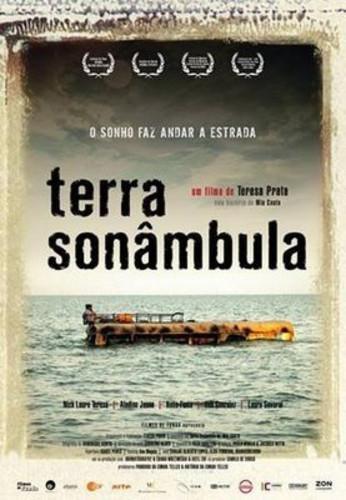
Critical Review: Sleepwalking Land

by Kelsey Cunningham (Major in Portuguese)


Sleepwalking Land directed by Teresa Prata (Terra Sonâmbula, Portugal/Mozambique, 2007), shows the viewer the necessity of stories and dreams to survive the brutality of warfare.

Mudinga, a 12 year-old boy who cannot remember his past, wanders with Tuahir, an old man, through the countryside of Mozambique. The pair travel aimlessly, gathering food and attempting to avoid the marauding gangs that plague the country. On their travels, they find a burnt-out bus littered with carbonized bodies.    Among the remains of the assault on the bus, the pair find a suitcase full of notebooks alongside the body of a man shot through the heart. The notebooks tell the story of war from a civilian victim’s perspective; Mudinga reads the pages aloud, giving voice to Kindzu’s own story of bitter loss and the physical and emotional wounds of war. Through these pages Mudinga also discovers possible clues to his identity and the identity of his mother. As Mudinga reads Kindzu’s diary aloud to the illiterate Tuahir, the audience wonders if perhaps the boy is inventing some of the story in order to justify his own hopes. As the plot progresses, reuniting Mudinga with his mother becomes the reason for the pair to go on.

A Sleepwalking Land is indeed the sense one gets from the depiction of Mozambique from this film, but the film does not mention any specific political group or even show any national symbols such as a flag or map. The film is meant to speak to the civilian casualties and suffering of any war, a place filled with sleepwalkers; people who are forced to hold on the dreams as their physically deprived and mentally drained bodies are tortured by the realities of human cruelty. Weakened but afloat in their own dreams, they are like the shell of a worn out bus drifting into the ocean; clinging to the last available shred of hope, as absurd as it may be, while slowly sinking into the abyss of inevitability lest they run ashore some unlikely salvation. The last scene captures the liberating power of dreams and stories beautifully as Mudinga approaches the abandoned ship where his potential mother has made her nest far away from the pain of land.

Both Sleepwalking Land novel and film are available at Robarts Library.

Explore our Portuguese Collections. Follow these links: Books & Films


Monday, 20 October 2014

INTERACTIVE NARRATIVES NEW MEDIA AND SOCIAL ENGAGEMENT


Read the Proceedings: interactiveconference.spanport.utoronto.ca

Watch Conference’s video: http://youtu.be/AotT8fhop-s


First Day – Thursday Evening – October 23rd

Media Commons Theatre Robarts Library (3rd Floor)

130 St George St, Toronto (St. George Subway Station)

18:30-19:00 Registration

19:00-19:30 Opening Remarks

19:30-20:30 Crowdsourcing Documentary Making: Social Protest, Social Media and Engagement – Greg Elmer (Ryerson University)

Special Screening: Preempting Dissent (2014, 41’)

_____________________________________________________________

 Second Day – Friday – October 24th

Room 119 – Emmanuel College

75 Queens Park Crescent E, Toronto (Museum Subway Station)

10:00-10:20 Registration & Coffee

10:20-12:00 Panel 1: New Narratives and Self-Interactivity

Moderator: Hudson Moura (Chair, Organizing Committee)

Florian Hadler & Daniel Irrgang (University of Arts Berlin, Germany) – Nonlinearity, Multilinearity, Simultaneity. Notes on Epistemological Structures

Tom Van Nuenen (Tilburg University, The Nederlands) – Journey as a post-literary travel tale.

Kris Fallon (UC Davis, USA) – Streams of the Self: The Instagram Feed as Narrative Autobiography

Siobhan O’Flynn (University of Toronto) – Narrative Strategies and Participatory Design: Framing New Methodologies for Narrative Studies

12:10-14:00 Lunch

14:00-15:20 Panel 2: Social and Interactive Multimedia Projects

Moderator: Martin Zeilinger (OCAD University, Canada)

Heidi Rae Cooley & Duncan Buell (University of South Carolina, USA) – From Ghosts of the Horseshoe to Ward One: Critical Interactives for Inviting Social Engagement with Instances of Historical Erasure (Columbia, South Carolina)

Rafael Antunes (Universidade Lusófona, Portugal) – Blue Pencil: Experiences in Transmedia

Mariana Ciancia, Francesca Piredda & Simona Venditti (Politecnico di Milano, Italy) – Shaping and Sharing Imagination: Designers and the transformative power of stories.

Coffee Break (20’)

15:40-17:00 Panel 3: Documentary and Social Interactivity

Moderator: Robert Davidson (U. of Toronto, Canada)

Ben Lenzner (University of Waikato, New Zealand) – Emerging Forms of Citizen Video Activism: Challenges in Documentary Storytelling & Sustainability

Begoña Gonzalez Cuesta (IE University – Madrid, Spain) – I-Docs and New Narratives: Meaning Making in Highrise

Janice Xu (Holy Family University, USA) – Telling the Stories of Left-behind Children in China: From Diary Collection to Digital Filmmaking

_____________________________________________________________

Third Day – Saturday – October 25th

Room 119 – Emmanuel College

75 Queens Park Crescent E, Toronto (Museum Subway Station)

10:30-12:00 Panel 4: Remediation, Art and Activism

Moderator: Marta Marín-Dòmine (Wilfrid Laurier University, Canada)

Benj Gerdes (Long Island University – Post, USA) – Broken Screens
(and the Publics who don’t view them)

Isabella Trindade (Ryerson University, Canada) – In-between: between the concrete and the virtual, the physical and the imaginary

Charo Lacalle (Autonomous University of Barcelona, Spain) – Analysing women’s web comments on television fiction

12:00-14:00 Lunch

14:00-15:20 Panel 5: Film and Interactive Narratives

Moderator: David Sweeney (The Glasgow School of Art, Scotland)

Sandra Lim (Ryerson University, Canada) – Xapiri: at the juncture of history, experience, and technology

Kalli Paakspuu (York University, Canada) – Off the Wall with Shchedryk

Alexandre Coronato Rodrigues & Roselita Lopes de Almeida Freitas (ESPM – São Paulo, Brazil) – Collective Authorship In Real Time

Coffee Break (20’)

15:40-17:00 Panel 6: Theatre, Multimedia and New Narratives

Moderator: Sandra Lim (Ryerson University, Canada)

David Sweeney (The Glasgow School of Art, Scotland) – Crossing Boundaries: National Theatre Live, Backstage Access and Maximum Visibility

Daisy Abbott (The Glasgow School of Art, Scotland) – Old plays, New Narratives: Fan Production of New Media Texts from Broadcast Theatre

Aida Jordão (York University, Canada) – Inês de Castro on YouTube: Re-gendered Narratives

17:00-17:20 Closing Remarks

_____________________________________________________________

Organizing Committee:

Hudson Moura (Chair) (Assistant Professor, Department of Spanish and Portuguese – University of Toronto)

Ricardo Sternberg (Professor, Department of Spanish and Portuguese – University of Toronto)

Regina Cunha (Ph.D. Candidate, Communication & Society Research Centre – CECS, Universidade do Minho, Portugal)

Cecília Queiroz (Director, BRAFFTV-Brazilian Film and TV Festival of Toronto)

Organizers:

Department of Spanish and Portuguese – University of Toronto

BRAFFTV-Brazilian Film and TV Festival of Toronto

Sponsors:

Department of Spanish and Portuguese – University of Toronto

Office of the Principal – Victoria College


Download Program – Download Program (PDF 1.5MB)